Category Archives: Voir Dire

$25 Million Verdict

What happens when a hospital creates a culture where sexual assault by male nurses on female patients is allowed, then defends the action as unpreventable? A jury tells them otherwise to the tune of $25 million (with no punitive damages!).

Massive congrats to attorneys Eric Rosen and Gregory Roe for obtaining a verdict that not only told the hospital that they were wrong but, more importantly, told a client with the most horrific pre-existing history of sexual abuse I’ve ever seen that she’s valuable. They deserve the praise.

Jennifer LaRue (my colleague and another wonderful consultant) and I ran a mock trial and big data study on the case and selected the jury together last week.

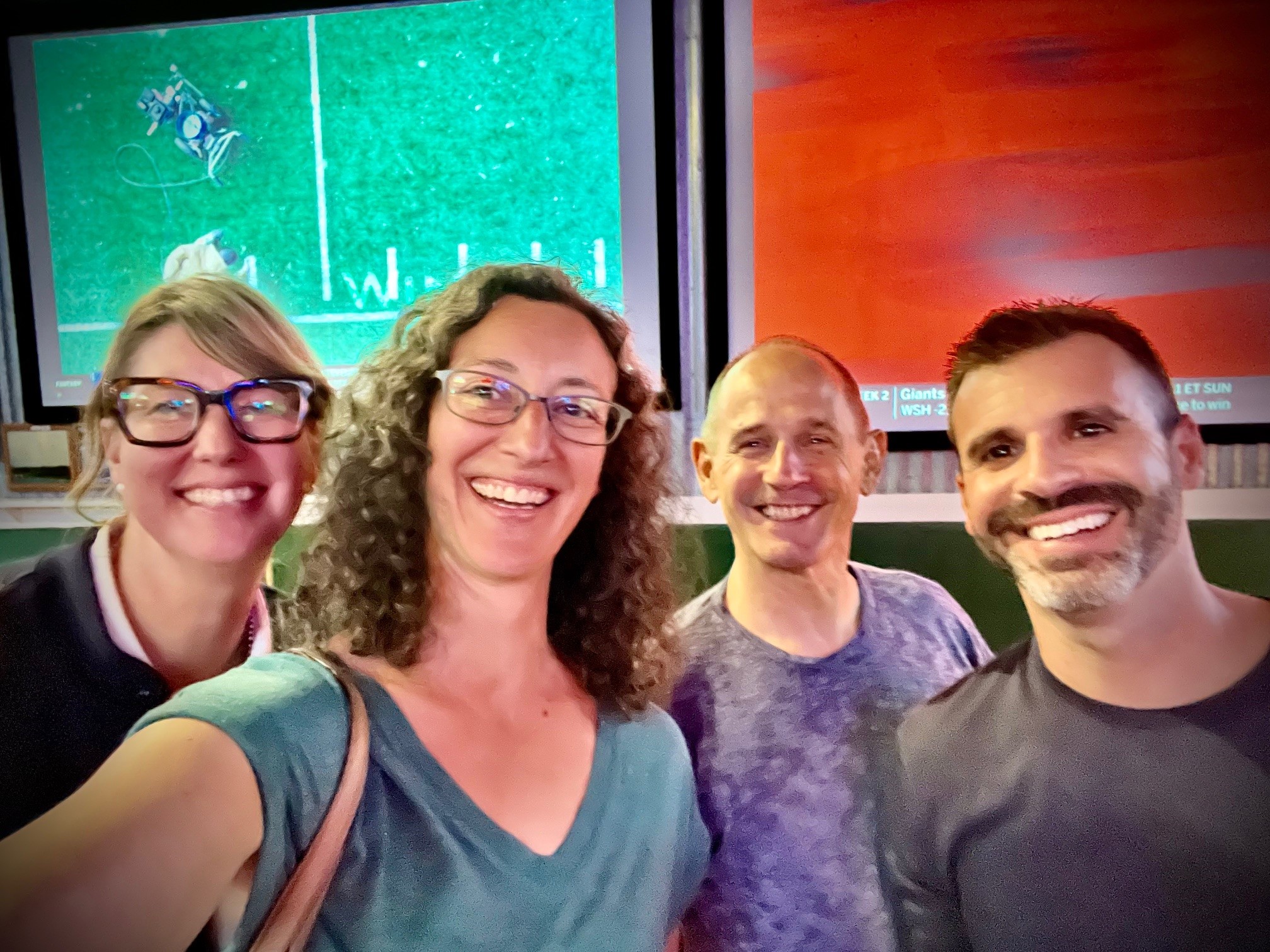
The second photo is our post-jury selection strategy dinner, which I promised to post as a victory photo once they won. Our smiles were due to the knowledge we gained from mock trials and data studies that this case was a winner and the fun was just beginning.

The license plate photo tells you all you need to know about Gregory Roe. Before we went in for jury selection, I asked Greg “what does FYHY on your license plate mean?” He looked me straight in the eye and said “F*ck Yeah, Hell Yeah!” If that’s not the attitude of a plaintiff’s attorney, I don’t know what is. I think it’s my new motto.

1 Comment

Filed under Focus Groups, Jury Research, Opening Statement, Trial preparation, Voir Dire

Big Data: What’s All the Fuss?

Big Data is becoming ever more pervasive in trial preparation, and for good reason. To use it effectively, you must understand what it is, what it is not, and how it best fits in your toolbox. Conventionally, trial preparation has included focus groups and mock trials, but now that big data is on the scene, how do these tools play well together? When should you use one over the others? What exactly is Big Data, and why should you adopt it?

What is Big Data, and Why is it Useful?

Big Data is the nomenclature for any large data set study. Several vendors run Big Data jury studies, some of which are more valid and reliable than others, a topic I won’t cover in this article. However, you can contact me privately if you have a vendor and want to know my opinion. 

The benefits of Big Data are its ability to extrapolate and predict. Most often, they are used to predict both liability and damages case outcomes. By running the case by several hundred jurors, we can fairly accurately predict what your best, worst, and average day in court would yield across different variables (such as damages “ask” or liability factors). For example, we can test the same case facts with three different damages asks: $10 million, $40 million, and $75 million. Let’s suppose that the low ask yields an average verdict of $5.5 million with a 75% win rate, the middle ask yields an average verdict of $30 million with a 78% win rate, and the large ask yields an average verdict of $25 million with a 60% win rate. That tells us that you are leaving tens of millions of dollars on the table by asking for $10 million, but $75 million angered jurors and caused them to punish you with a lower case value and win rate. You would then know that your ask at trial should likely be around $30 million and that you have a high probability of winning. 

You will also receive a juror profile. At the outset, jurors fill out answers to several questions, often answering up to 80 intake questions. Their answers are then correlated with their liability and damages verdicts to give you a profile of a good or bad juror. These criteria are often things we can only learn from Big Data. For example, someone who watches the NFL might be 47% less likely to find in your favor while someone who regularly watches Double Jeopardy may be 35% more likely to give large damages. 

How accurate is Big Data? It’s hard to tell as many cases settle and trial often brings surprises, but it is known to be fairly accurate, often within 5% of verdicts. Some of this accuracy, however, stems from properly preparing a Big Data study, which many fail to do. 

Do I Need a Consultant to Run a Big Data Study?

No, you are not required to have a consultant, though I think it’s a mistake to run one without. I regularly review Big Data scripts submitted prior to my retention. I find various errors, including weak defense arguments, missing information, confusion, damages asks that are outside the limits of the venue caps, misinformation regarding expert opinions, and very frequently weak case framing. All of these can render Big Data results misleading and invalid, and all were missed by the Big Data vendors.

Avoiding these pitfalls is hard when you are immersed in the case. Most Big Data vendors will suggest having a consultant assist with the project. Those who run Big Data studies are statisticians and know how to work with data. Some are even attorneys. However, they do not have the skills or the time to read through case documents and converse with you about small but important details of the case. They may review your scripts and make suggested changes, but they are not involved in the depths of the case necessary to catch errors or create proper framing. Therefore, to save the integrity of the study, it is suggested to have a consultant assist on the front and back ends. When I work with Big Data, the costs are only slightly higher to have my involvement as I’m taking work off their plates in preparing the study properly. Thus, you can have a consultant on board to direct the research and dive deep into the case for the same price or a few thousand more.

Having a consultant help with Big Data is also essential for moving forward and implementing findings. When you find out what jurors are good or bad, how do you implement those questions into your voir dire? How much weight do you give them compared to what jurors say during voir dire? How do you implement the Big Data findings into your case framing? These are all issues a consultant can help with.

Big Data vs Focus Groups & Mock Trials

How does Big Data interact with focus groups and mock trials? Do we still need these smaller juror studies? Absolutely. Big Data is excellent at predicting damages and trial outcomes but not very useful for framing or understanding what jurors like or dislike about the case. It does nothing to show deliberations or group dynamics. Conversely, focus groups and mock trials are terrible at predicting damages or case outcomes but are fantastic for case framing, group dynamics, and getting feedback on issues with the case.

When budgets allow, I prefer to run a focus group or mock trial first to adjust case framing and then use that new frame for a more accurate Big Data study. However, suppose you are headed to mediation and need an early read on the case value. In that case, it may be worth running a Big Data study first and then running focus groups and mock trials, potentially running a second Big Data study later. 

Costs

What does this all cost? As with most things in life, it depends. The price varies with the length of the statements and videos, as well as the number of damages anchors or other variables tested. If you would like a quote, don’t hesitate to reach out.

Leave a comment

Filed under Focus Groups, Jury Research, Online Research, Voir Dire

Holmes (Aurora Theater Shooting) Jury Selection Q&A

With the Holmes jury selection underway and the whole world watching, I thought it relevant to tap into some of the issues that are likely to be raised by the media and inquiring minds. One of the largest nets has been cast over Arapahoe County, Colorado, to find an “unbiased” group of jurors for the infamous trial. Holmes is facing murder charges and, should a jury disregard his insanity defense, a death penalty. This makes for an interesting jury selection due to the notoriety of the case as well as the issues of insanity, death qualification, and Colorado’s unusual law requiring the Prosecution to prove sanity. Let me address some general questions that will arise as the jury selection moves forward:

1. What happens to jurors who are potential jurors but who have not yet been selected?  Jury selection in this case is scheduled to take a couple months. This raises some interesting questions such as “What happens when a juror is questioned and then released back into their normal life for a couple months before trial starts?” It will potentially help some jurors get their lives in order for the impending long trial, but it also gives them time to potentially be bombarded with media information about the case. Although jurors are instructed not to look up anything about the case or read about it, it will be hard to avoid all day around work colleagues and friends especially when the potential juror doesn’t even know if they are yet on the jury.

2. For large cases like this, how do attorneys know what types of jurors they are looking for? Attorneys have likely run a series of focus groups to aid with jury selection and case strategy. Often jurors in focus groups reveal pivotal issues that the attorneys would never have considered. Those issues then need to be crafted into voir dire questions that can elicit honest discussion about juror viewpoints. In addition, attorneys may do some mock jury selection with focus group participants to practice honing in on question format as well as making sure to connect with the jury, get truthful answers (which is an art in itself), and keep up with any time limitations set by the court. Attorneys will be delving deep with jurors to find out their biases and beliefs. In a case such as this, the Defense will be looking for people who believe that mental illness can have a real effect and who are willing to follow the law regarding insanity. The Prosecution will likely be looking for jurors who are more emotional about the case and who are more apt to believe that a killing whether done in a moment of insanity or not, is a killing worthy of 1st degree murder and the death penalty.

3. What types of questions can attorneys ask to reveal hidden bias? Attorneys often need to focus on lowering the barriers to “bad answers.” What you want to hear from jurors are their honest viewpoints and often those viewpoints or biases are hard to hear when you are advocating for one side or the other. An example of a bias would be a reporter who is asked to sit as a juror on a First Amendment rights case where the reporter would obviously have a personal opinion on First Amendment rights of the press. Another example would be a doctor or nurse as a potential juror on a medical malpractice case. There is often a concern that the biases could “contaminate” the rest of the jury pool. In my opinion, this is not a valid concern. The chances of someone changing their deeply held views simply because a stranger sitting next to them voiced a conflicting viewpoint are slim to none. Therefore, attorneys need to focus on bringing forth those biases, embracing them, thanking jurors for their honesty, and using the voiced biases to generate more honest discussion.

4. What about Stealth Jurors or jurors who want a book deal out of this? The concern is less about jurors wanting a book deal per se as that is not very common, but more about jurors who may want some sort of media recognition or power. Attorneys will need to look for people who seem to want their 15 minutes of fame or who are excited about serving in this case. Those would be red flags. As for stealth jurors (or jurors who have an agenda), it is a real concern without a good solution. Stealth jurors do exist and jurors do sometimes lie to try to get on a jury. In this case, jurors could have very strong feelings about the death penalty or this defendant in particular and want to get on the jury to make a statement. The only way to find a stealth juror is through comprehensive questioning and coming at them at every angle. Attorneys should also be looking for changes in body language or tone of voice when a juror answers mundane questions as compared to when they answer more case-specific questions. Changes in nonverbal communication CAN be ONE indication of deception.

5. In a case like this, how can stress impact jurors and their decision making? How can attorneys screen for jurors who will hold up best under the stress to decide a verdict based on the evidence and not emotion? Stress can become an issue even in less high profile cases. I’ve interviewed many jurors post-verdict and if the evidence is personal to them in any way or they feel a connection to a party or witness, the trial can be emotionally taxing for them. Those same jurors, however, express a sense of civic duty to pay close attention and to listen to even the most horrific testimony. Attorneys need to be sensitive to the nature of the case and discuss the difficulty in seeing unsettling images or hearing heart wrenching testimony. Some people are better equipped to deal with such evidence than others. As for deciding a verdict based on the evidence and not emotion, this is a problem in every case, including civil cases where jurors could feel sympathetic to an injured party or to the person being sued. The law is that sympathy can be felt but cannot be a part of the verdict. The task for the defense in this case is to emphasize to jurors that emotion is human and feeling it is allowed but deciding a verdict on it is not. The defense attorneys will be looking for jurors who are able to follow the law regardless of their emotions. The prosecution, on the other hand, will benefit from jurors who have a hard time setting their emotion aside.

6. Do attorneys choose based on demographics or are they more concerned with questioning the individual? Attorneys may ask some of those questions and it can provide SOME information on jurors but what matters most is the individual. Jury selection based on demographics simply does not work in the vast majority of cases. It could be that certain groups of people will have had similar experiences in life and therefore are more likely to think a certain way but attorneys would want to confirm that with multiple focus groups and even when there may be a correlation, people are individuals and it could be a costly mistake to assume a juror will harbor one bias or viewpoint based on demographics alone.

As the trial progresses, it will be interesting to see who the jurors are and how they handle the evidence.

Leave a comment

Filed under Voir Dire

Do You Really Win or Lose Your Case In Jury Selection?

It’s been said many times that you win or lose your case in jury selection. But is this really true? Is jury selection so critically important that it will make or break the verdict? Yes and no.

Jury selection is critically important. No doubt about it. However, I do not believe that the jury you have seals the fate of your case. Of course evidence matters, but that’s not even what I’m referring to. Jury selection is a misnomer. We all know it’s really about de-selection. And that implies something – it implies that you’re not choosing the jury that’s best for you, you are eliminating the worst on the panel. That’s all jury selection can do – give you a better chance at a good verdict than you had before you started eliminating people.

In most jury selections I take part in, there are more “bad” jurors for our side than good. While cause challenges certainly help, judges are often hesitant to grant them even when a juror outwardly states that they cannot be fair and impartial. This often leaves you with 4 strikes but 7-8 bad jurors. And those are just the bad jurors that you know of. How much do you really know about the person when your voir dire is limited to 20 minutes? Sure, sometimes your opponent may strike a bad juror or two for you if they also believe they are harmful to their case, but more times than not, you will have more jurors to strike than you have strikes and you will likely be left with one or two jurors that were more quiet whom you know little about.

This brings me back to my original point. A great majority of the time (maybe even all of the time – but I hate absolutes, so we’ll say over 95% of the time), you don’t win or lose your case in jury selection. Even if you think you have a good jury, you never know what answers you would have gotten if you’d had more time to talk to the jurors during voir dire. During jury selection, you can only improve your chances of a good verdict but always go into trial assuming that you will have a few bad jurors left on your panel.

3 Comments

Filed under Voir Dire

Jurors United? Something to Consider During Jury Selection

The jurors in the Drew Peterson case are drawing some media attention. While it seems to be out of a movie (Runaway Jury, in fact), the jurors coordinated clothing for a month during the trial. One day it was yellow, another day blue, another day green. Some days it was business suits and other days sports teams jerseys. They have also alternated red, white, and blue, in what may or may not be a sign of patriotism. Without talking to the jurors, no one really knows what this all means. Some say it means the jurors are not taking their jobs seriously. I would doubt that from my multitudes of interviews with jurors, a great majority of whom took their jobs very seriously. What it does show, regardless of the message, is that the jurors are united and getting along.

Does that mean there will be a verdict? Possibly. The odds are higher that there will be a verdict when jurors unite than when there is dissent amongst them. But it is possible that they all get along wonderfully yet disagree on some parts of the evidence or the law.

There is one lesson to point out in this. When you pick a jury, be conscious of the dynamics of the group rather than only focusing on individual jurors. If you want a hung jury, try to put clashing personalities on the jury together. If you want a cohesive group who is more likely to reach a verdict, try to get jurors whose personalities and backgrounds mesh well. Jurors form relationships over the period of a trial and just like any relationship in life, it can be harmonious or tumultuous. Spouses that fight all the time rarely make any decisions together. The same goes for jurors.

What will the verdict be in the Peterson trial? Only time will tell. But I would place money on the fact that if there are disagreements in that jury room, they are being worked out in a civilized fashion with respect for the system and each other.

Leave a comment

Filed under Jury Research, Trial preparation, Voir Dire

What To Do (And Not Do) With Short Voir Dire Time

Voir dire time in many places is now limited to 15-30 minutes (if you get attorney-conducted voir dire at all!). Aside from filing motions for extended voir dire, arguing with the judge, asking for more time when your time is about to be up, and many other suggestions for getting more voir dire time, I want to address some ideas of what to do when you are stuck with such a small amount of time.

There are some very good attorneys and consultants who will suggest using scaled questions (those are questions where you have people give answers on a scale of 1-5 or 1-10, etc.) in such situations. They suggest coming up with some questions about tort reform or specifics about your case and go down the line of jurors asking where they fall on the scale.

I would suggest something different, however. I understand the need to get as much information from jurors in such a short amount of time but my fears in using the scaled method are:

  1. Unless you have really tested the questions and reliability of the scales, you may learn absolutely nothing. I often use scaled questions on my intake forms for focus groups and most of the questions asked have no correlation to the juror’s ultimate opinion. Many jurors who say they are in favor of caps, for example, will go way beyond their maximum dollar amount when they hear the facts of the case. Further, you don’t know why the jurors hold such beliefs or how ingrained the beliefs are unless you talk to them.
  2. You give up any chance you have to become likeable and create rapport with the jury. If all you do is go down the line and have jurors shout out numbers at you, the jurors learn nothing about you and you learn very little if anything about them. Jury selection is a time for you to create a bond with the jurors. Jurors are already degraded by being given a number instead of a name, herded like cattle, and told where to sit. You only add to their degredation by having them give numbers instead of answers.

My suggestion is to use whatever little time you have getting jurors talking. If you’re a plaintiff’s attorney, you probably want to focus on tort reform and just get them spouting off about frivolous lawsuits and greedy attorneys. Let them see you listening and thanking them for their answers. They will feel a whole lot better about you if you spend your 15 minutes with them asking questions and facilitating a dialogue than giving scaled answers. That’s not to say that you can’t use one or two scaled questions within the discussion or ask a couple of hand raising questions to find out which jurors to start the conversation with, but the main focus should be on getting to know the jurors as people and them seeing that you have an interest in them.

2 Comments

Filed under Voir Dire

Where You Are Losing Leverage With Preponderance

Preponderance is one major foundation of all civil lawsuits. If jurors truly made their decisions on the basis of more likely right than wrong for liability AND damages, there would be many more plaintiffs verdicts.  David Ball has done wonderful work in his Damages books teaching attorneys how to weave preponderance into a case from voir dire through closing but there may be one major area where you’re missing the leverage preponderance gives you.

My father is a neuropsychiatrist.  He has been deposed before and testified at trial.  Recently he was deposed about a prior patient of his. Afterward, we had a discussion about preponderance.  He told me that the attorney asked if various things were more likely true than not, a phrase he has become very familiar with after listening to me talk, but that the meaning of the phrase never really sunk in.  When he was hesitating on a question, the attorney asked if it was just 50.001% true and it clicked – more likely than not means only 50.001% – and he quickly answered the question that of course it was at least that probable!  When I asked what he thought “more likely than not” meant, he said it obviously did mean 50.001% but that without the percentage being directly pointed out to him and without time to really sit and think about the meaning of the phrase, it just meant a lower standard than “beyond a reasonable doubt.”  In asking a few other doctors about their perceptions, I got the same answers.

You may be losing ground with your own experts as well as cross-exam of the defense experts if you are not clearly pointing out that “more likely than not” means 50.0001%.  While it’s obvious that the phrase can mean nothing more than that, I’m finding that many people do not think hard enough to put it in those terms. Make sure to explain what it means in percentage terms and if a witness is waivering, remind them that it only means 50.001%.

2 Comments

Filed under Burden of Proof, Voir Dire

Maximizing your Budget for Voir Dire

The more I am called in to help attorneys with jury selection, the more I realize their money may have been spent better elsewhere. Am I advocating that having a consultant attend voir dire is a waste of money? Absolutely not. But unless you are skilled enough at conducting voir dire, you may not be able to elicit the attitudes from jurors that your consultant needs in order to guide you as to which jurors are good or bad for your case. I have attended one too many voir dires where the attorney was confusing, wasting much of their limited voir dire time trying to re-explain themselves to the jurors who sat with furrowed brows or failed to nail down cause challenges thereby losing multiple opportunities to make their peremptories go further or asking questions in a format that elicits only the politically correct answers.

Here is my suggestion. Gather 12 people and bring them into your office. They don’t need to match your venue’s demographics because you don’t care what they say, you only care that you have bodies to practice on. Pay them in pizza. Have another attorney play judge and try to rehabilitate your jurors after you set the grounds for cause challenges. And finally, have your consultant there to critique you during the process. Practice staying on schedule, getting jurors to talk to one another, getting jurors to give you “bad” answers, and getting jurors to strongly commit to cause-challenge answers. Don Keenan and others have been suggesting this, but I know not nearly enough attorneys are doing it because I am at all of your voir dires!

I would much rather send an attorney into voir dire prepared and without me than to be unprepared and have me there but not elicit information I need to be helpful. If you have the budget to do a voir dire focus group and have a consultant at voir dire, by all means, do both. After all, the focus group should only take a few hours. But if it’s one or the other, I would STRONGLY suggest using your consulting budget on voir dire practice. Besides, it will pay off not only for that case, but for any future case. That is money well spent!

2 Comments

Filed under Jury Research, Misc, Voir Dire

How to Use “Herd Mentality” to Your Advantage

As advanced as humans are, we are still primitively just mammals belonging to a herd.  Animals and people stay in herds because it provides safety.  If one member finds danger, the rest of the herd is alerted.  Think about being out in the African desert completely alone.  Now picture having a group of people there with you.  I would suspect your stomach felt very different imaging the two scenarios. 

Jurors are no different.  In mock trials and focus groups, I ask jurors what other information they think would be helpful.  There is often one juror who wants to know what other jurors in similar cases decided – how much money did they give?  The want to know the precedent.  Why?  Because they want to follow the herd. 

You can use this mentality to your advantage in several ways.  Some of those methods are taught in “Reptile” seminars with David Ball and Don Keenan and I would suggest attending to get more plaintiff-specific methods.  Here, I want to mention some basics. 

1. When talking to experts or witnesses, use the word “us” instead of “the jury.”  For example, “Dr. X, can you explain to US how the blood vessels became clotted?”  This puts you in the same boat as the jury and unifies the jury as one group.

2. Get jurors to see their own commonalities.  You can start to unify jurors as a group early on in voir dire.  Explain how most people who get jury summons don’t want to come but they all have something in common – they all showed up.

3.  Frame questions for your experts in a manner that hints at what others may think.  For example, ask experts, “so, most agree…?”  This hints to jurors that others think one way and to be part of the herd, they better follow.

4. In closing, tell jurors “I wish I could tell you what other jurors in cases like this do, but I’m not allowed to.”  This insinuates that what you say is in line with what other juries say or do.  Greg Cusimano is very good at this method so I suggest reading up on his works as well.

To finish it off, I’m posting  a video purely for entertainment purposes but it certainly demonstrates herd mentality:

http://www.youtube.com/watch?v=lYTBOhicf4g&feature=player_embedded

2 Comments

Filed under Focus Groups, Jury Research, Misc, Uncategorized, Voir Dire

What Do Jurors Care About?

Do you ever feel like jurors decided your case randomly or based on something other than the evidence you presented?  It’s highly probable.  It happens often and you need to understand not only how to minimize that risk, but how to control for it and use it to your advantage.

This blog is named “jurorproof” for a reason.  Most everything I post about has to do with proving your case to jurors.  That may sound obvious, but please make sure you understand the significance.  There is a huge difference between “legal proof” and “juror proof.”  Legal proof is what you have to prove to meet the elements of the claim.  The judge requires it and the jurors to some degree care about it when the go to fit the evidence into the verdict form.  But to really win over a jury, you need to appeal to juror proof – the things jurors want and need to hear that may be completely unrelated to proving your claim in a legal manner. 

For example, in a medical malpractice claim, you not only have to show duty, breach, causation, and injury.  Jurors may care about your client’s hopes for the future.  They care that your client drafted a living will before going into surgery because it means (to them) that your client had a death wish (yes, this has come up in a couple of my focus groups).  They care that there was no secondary backup system for files even if not required.  These are things that they need to fill gaps in the stories they create based on their own experiences and backgrounds.

In 1986, Pennington and Hastie did research on mock jurors and found out that only 55% of story references made by mock jurors are made to events/evidence directly testified to whereas 45% were made from inferred actions, mental states, and goals that jurors drew from their own backgrounds to fill in gaps in the story.  Is this just in mock trials?

Well, in 1996, the Arizona Project kicked off where judges in Arizona allowed video cameras into the deliberation rooms of real juries.  The numerous tapes and transcripts (I’ve seen them myself) back up the reasearch from Pennington and Hastie.  Sometimes you want to scream at the jurors to get back on track – you want them back on legal proof grounds.  But that’s not what matters to them.

So what does all of this mean for you?  For one, it means that you need to fill in gaps in your story before the jurors do it for themselves.  One thing that makes for a believable story is that it is comprehensive.  The less gaps the better.  I understand that if you have an illegal alien for a client, you may not want to bring up that piece of information to the jurors if you have an order from the judge excluding it from trial.  But if jurors see your Spanish-speaking Hispanic client, they will wonder it themselves.  This is something they will care about.  Whether your client is illegal or not has nothing to do with legal proof but you better believe it’s a big part of juror proof.  Deal with it in voir dire.

Secondly, do some research.  Find out ahead of time what juror proof for your case is.  The only way to do this is to talk to real people – people who match the demographics of your trial venue.  If you can’t afford to hire someone to do a focus group in a reliable manner, at least talk to some neighbors.  Go to a mall and talk to strangers about your case.  Buy them a coffee or ice cream in exchange for their time.  Without that feedback, you would never know that having a living will means having a death wish to jurors, for example. 

Don’t go into trial blind to the juror proof.  You would never go into trial without knowing the legal proof you need to fulfill.  This is no different and equally important.

3 Comments

Filed under Burden of Proof, Focus Groups, Jury Research, Voir Dire